
Why Pilates is Good for Running
Whether you’re training for a Marathon or enjoying park runs on a Saturday morning, running is hugely popular in Australia. But many runners focus almost entirely on logging kilometres, overlooking a key component of injury prevention: cross-training. Without it, muscle imbalances, poor joint mobility, and weak stabilisers can creep in, especially if training volume or intensity increases too quickly. These factors often lead to familiar overuse injuries like shin splints, knee pain, or IT-band issues. In short, pounding the pavement without balancing exercises can be a recipe for injury.
Common Causes of Running Injuries
Repetitive overuse: Running is high-impact and repetitive. Using the same muscles and joints thousands of times a week can create micro-injuries if muscles fatigue or tighten. Research shows that 50–75% of running injuries come from overuse rather than acute accidents [1].
Muscle imbalances: Many runners develop uneven strength, such as strong quads but weak glutes. Weak hip stabilisers, like the gluteus medius, can allow the knee to drift inward under load, stressing the knee and hip. Over time, this can lead to chronic knee, hip, or back pain.
Stiffness and poor mobility: Tight hips, ankles, or spine limit movement efficiency. If the body cannot absorb force properly, extra stress is transferred to knees and feet. Ramping up speed or distance too quickly with these restrictions increases injury risk.
Training errors: Sudden jumps in weekly mileage, such as going from 20 km to 30 km without preparation, overload the body. Without strength and mobility work, the musculoskeletal system struggles to cope.
Understanding these factors is crucial. Efficient running requires a balanced, stable core and hips, along with flexible joints. When any of these areas are weak or stiff, running form suffers. This is where Pilates comes in.
How Pilates Helps Runners
Pilates is a low-impact exercise system focused on controlled, mindful movement. It strengthens the core, balances muscles, and improves coordination and breathing. For runners, this translates to reduced injury risk and improved performance.
Balancing strength: Pilates targets underused muscles, especially deep core, glutes, and hip stabilisers. Exercises like side-lying leg lifts or clamshells strengthen the outer hips, helping to keep the pelvis level. Stronger stabilisers mean hips, knees, and ankles share the load more evenly.
Improving joint stability and alignment: Controlled Pilates movements improve neuromuscular control. By firing the small stabilising muscles around the pelvis and knees, runners reduce inward knee drift and protect joints from stress.
Enhancing running economy: A balanced core and stronger stabilisers lead to more efficient running form. Studies show that runners who added 12 weeks of Pilates to their routine improved their 5 km times and reduced oxygen consumption at the same pace [2].
Increasing flexibility and mobility: Many Pilates exercises stretch and strengthen simultaneously. Improved hip, hamstring, and calf flexibility promotes smoother strides and less chronic tension on muscles and joints.
Supporting posture and breathing: A stable core improves posture and breathing mechanics. Coordinated Pilates breathing trains the diaphragm and deep core, helping runners maintain efficient breathing under fatigue.
Core Strength, Breathing, and Running Form
Pilates trains the entire core, not just the abs. The deep stabilisers (transversus abdominis, pelvic floor, hip rotators) are crucial for keeping the spine and pelvis steady. For runners, this means:
- Running taller and straighter, keeping airways open.
- Coordinating breath with stride for efficient oxygen use.
- Maintaining posture and form under fatigue, reducing the risk of injury and improving power transfer through hips and legs [3,1].
Practical Pilates Exercises for Runners
Adding just 15–30 minutes of focused Pilates a few times a week can make a huge difference. Key exercises include:
- Shoulder Bridge (Hip Raise): Activates glutes and hamstrings while opening hips and mobilising the spine.
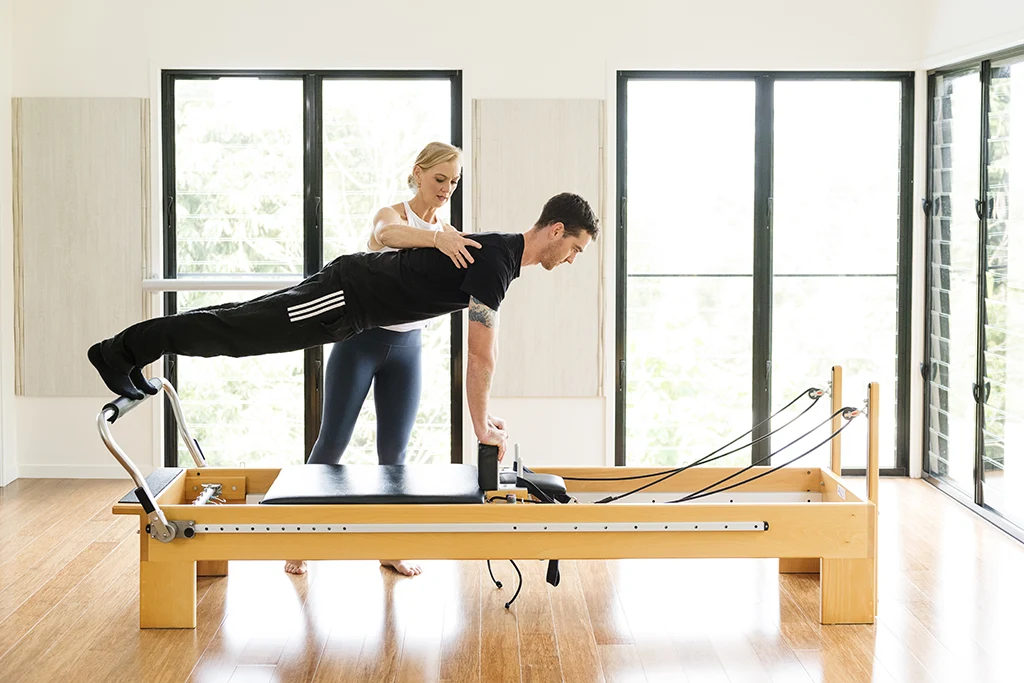
- Plank (Front and Side): Builds a strong trunk and trains alignment under load. Side planks target obliques and hips.
- Clamshell / Hip Abduction: Strengthens the gluteus medius, preventing knees from collapsing inward.
- Single-Leg Balance or Leg Circles: Improves hip and ankle stability, mimicking running stance.
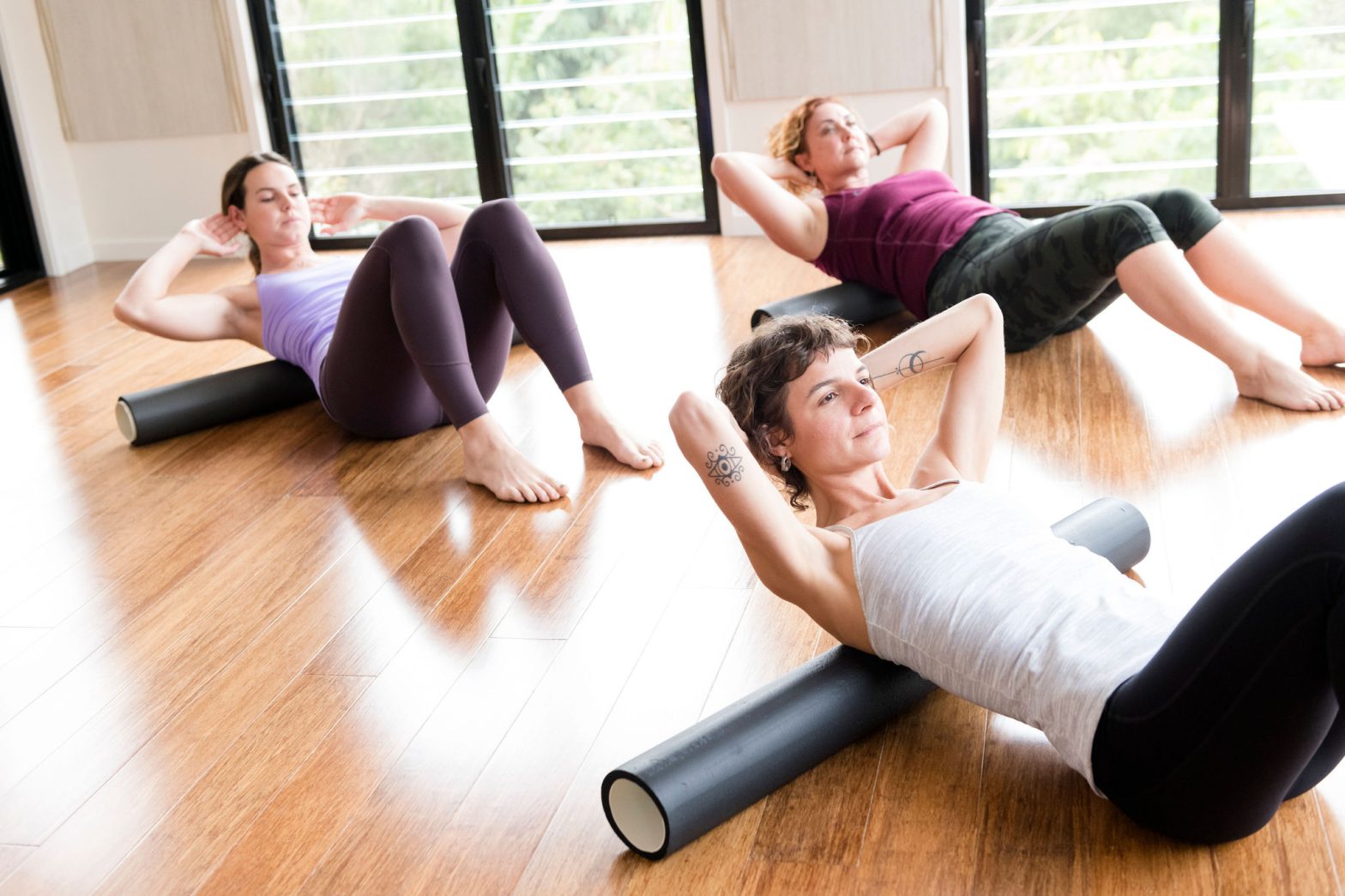
- Spine Stretch / Roll-Up: Enhances trunk flexibility, promoting taller posture and efficient breathing.
Over time, these exercises improve gait fluidity, knee tracking, and endurance, all critical for injury-free running.
Bringing Pilates to Runners
Pilates instructors can translate research into practical sessions tailored for runners. Workshops or classes focused on “Pilates for Runners” are highly appealing, especially when linked to measurable benefits like faster 5 km times and reduced injury risk. Even short sessions on rest days can target weak points, such as glutes, core, and posture, that often hold runners back [4].
In Australia’s active running community, offering evidence-based Pilates programs can set your studio apart. By combining flexibility, strength, and posture work, you help runners run stronger, faster, and with less risk of injury.
References


Latest Blog Post